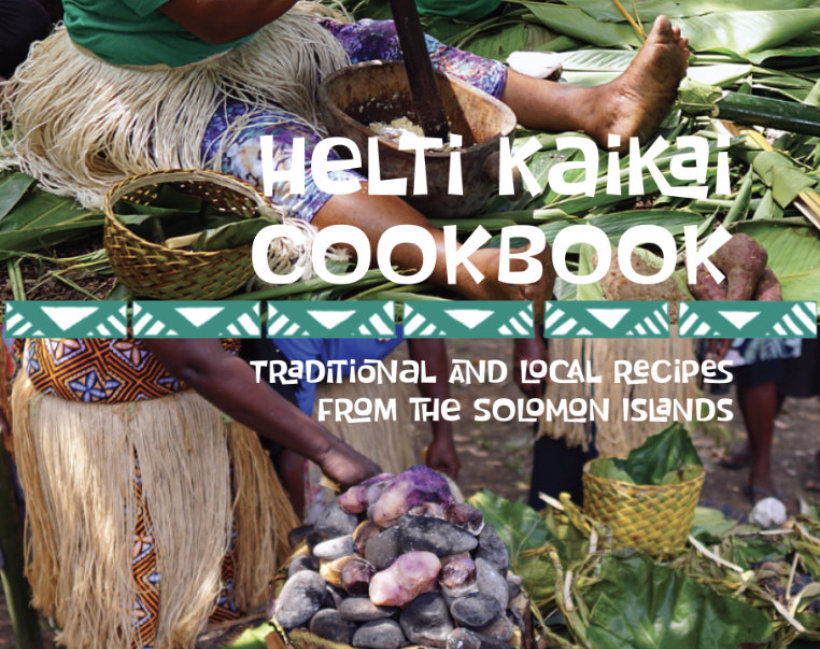

Few places illustrate the connection between biodiversity, culture and community as powerfully as Solomon Islands.
Solomon Islands forms a major part of a global biodiversity hotspot and sits at the heart of the Coral Triangle. It has more restricted-range and unique bird species per unit area than anywhere else on Earth, while its marine ecosystems support more than 500 coral species and 1,000 reef-fish species. Remarkably, Solomon Islands supports around 60% of the world’s coral species in less than 1% of the ocean’s surface.
But these are not simply biodiversity assets to be protected. They are living biocultural landscapes and seascapes. Customary tenure, traditional ecological knowledge and community governance continue to shape how forests, rivers, reefs and marine resources are owned, used and managed. Around 85% of Solomon Islanders depend on subsistence agriculture, fisheries and forestry, making biodiversity conservation inseparable from food, livelihoods, culture and community resilience.
We’re therefore delighted that TerraCircle has been selected by IUCN to lead the development of the GEF Ridge-to-Reef Ecosystem Restoration in Solomon Islands project design.
The project will work across three remarkable areas:
- Marovo Lagoon and its catchments, including the world’s largest double-barrier enclosed lagoon and an area of globally outstanding marine biodiversity;
- the Rua Sura Islands and Rere River catchment, connecting the biodiversity-rich Guadalcanal highlands with reefs, mangroves and seagrass; and
- the Bloody Ridge–Lungga/Mataniko catchment, where restoration and biodiversity conservation intersect with the pressures of a rapidly growing Honiara.
Across these landscapes, the project will take a ridge-to-reef approach, recognising that what happens in forests and upper watersheds ultimately affects rivers, mangroves, seagrass, coral reefs and the communities that depend upon them.
For TerraCircle, whose relationship with Solomon Islands goes back more than 25 years, it is a privilege to help shape an investment founded on something fundamental: in Solomon Islands, conserving biodiversity means working with the people who have owned, used, understood and cared for these landscapes and seascapes for generations.