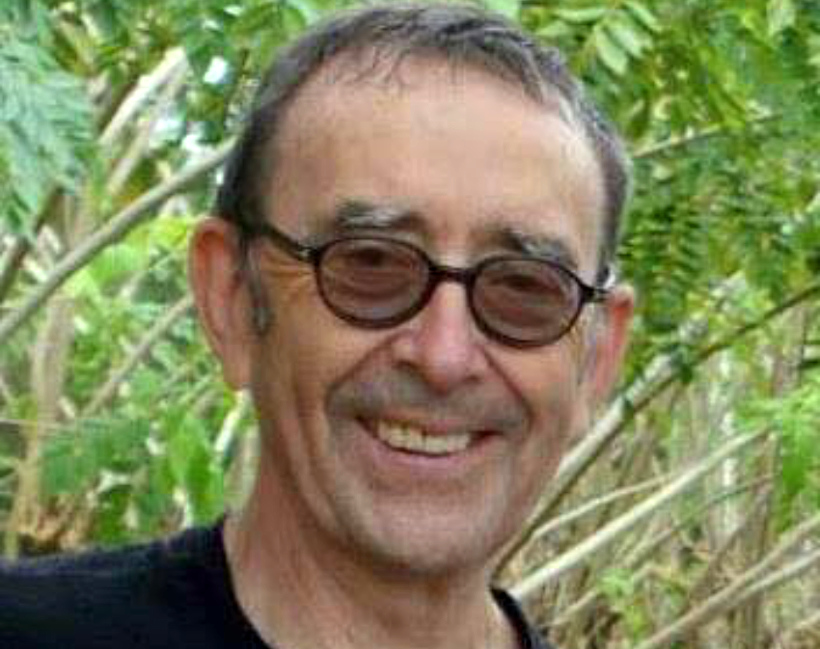
Geoff Dean

Home/Geoff Dean

Associate member of TerraCircle
Currently based in Sri Lanka.

Skills

  • Agriculture Specialist 
  • Educator
  • Researcher

Experience

Smallholder Tea Farmer Mentor             2026 

Milkcoop, Sri Lanka (through Australian Volunteers Program)

Based with the NGO, Milkcoop in Deniyaya, Matara District, I am currently collaborating with smallholder tea farmers, agricultural agencies and industry stakeholders to identify soil-related constraints affecting tea productivity, quality and profitability. I am developing practical recommendations and technical resources to improve soil health, nutrient management and climate resilience, while delivering training programs for farmers and staff. I also support organisational development through donor engagement and funding proposal preparation.

Agriculture Specialist Trainer 2024 – 2025 

Ministry of Natural Resources and Commerce, Republic of Marshall Islands (through Australian Volunteers Program)

In this position based in Majuro I was responsible for developing sustainable food production systems by introducing climate-smart agricultural techniques including improved water management and compost through targeted composting using local waste and byproducts to alleviate soil nutrient deficiencies. Training modules and factsheets were developed to enable understanding and managing of RMI soils. Increased consumption of nutritious, locally-produced foods was promoted through fostering home garden and small-scale food production. 

Food Security Mentor 2021 – 2024

Gentle Footprints, Launceston, Tasmania  

As a partner in this business with my wife, I have provided technical advice and support on food production and food security issues to government agencies in Australia and other agencies operating overseas including the Pacific Community (SPC), Departments of Agriculture and local government in various Pacific countries and NGOs.

Past activities include:

  • Atoll Food Futures (Department Foreign Affairs and Trade funding through Live and Learn Environmental Education) 

Live and Learn is an NGO operating in the Pacific and Asia, https://livelearn.org/. AFF, successfully implemented in Tuvalu and Kiribati, aims to enhance resilience and food security. A scoping mission to Nauru was conducted in March 2024 to explore the feasibility of extending the AFF initiative to Nauru. The mission assessed the appropriateness, interest and feasibility of introducing climate-smart agriculture technologies such as wicking beds, targeted composting and container plantings to Nauru. In an additional project questionnaires were designed for households in Kiribati, Tuvalu and Fiji as well as monitoring and evaluation activities.

  • Tuvalu Food Futures (Department of Foreign Affairs and Trade through DT Global) 

Technical advice was provided for alternative food growing systems, upscaling of compost production and online training sessions on soil management for Tuvalu and Kiribati. Optimal growing media for use in wicking beds, in particular Foodcubes (https://www.biofilta.com.au/), was researched at the University of the South Pacific, Samoa and Uni of Tasmania (two Masters and one Honours student). The project also assisted with growing suitable crops for use in Foodcubes in Fiji through SPC (The Pacific Community). Social data associated with food gardening and implementation of Foodcubes in indigenous communities in the Northern Territory and a migrant Nepalese community in Tasmania was also collected and collated, showing the value of gardening for participant well-being. 

  • Evaluation of fishmeal as a fertiliser soil ameliorant (Australian Centre for International Agricultural Research, ACIAR): In field trials addition of processed fish waste gave significant increases in yield and quality of taro production in Fiji.
  • Evaluation of coconut wood biochar as a soil ameliorant (ACIAR): -Conducted field trials and reported on the effects of different methods of biochar production and feedstock on taro production on Taveuni island, Fiji.

Research Fellow – Agricultural Systems 2014 – 2021

Tasmanian Institute of Agriculture, University of Tasmania, Launceston  1998 – 2011

Over the course of my working life at UTas I was chief investigator for a wide range of projects sourcing funding from agencies including the grains, horticulture and livestock research and development corporations, ACIAR, National Landcare Program and Department of Agriculture, Forests and Fisheries. In this position I worked on over 25 field crops including the major grain crops but also less well known species such as quinoa, amaranthus and camelina. Most of my work focussed on a systems approach to agriculture including optimising crop/livestock systems with production of dual purpose (grazing and grain) and short-term fodder crops. More recent work was directed to improving soil management practices through subsoil manuring, organic amendments including biochar, increased ground cover, stubble retention and direct drilling of crops. 

Notable achievements included:

  • Instrumental in the adoption of raised bed farming systems and direct drilling of broadacre crops in Tasmania and improved agronomic practices such as canopy management. 
  • Introduced new niche-market crop options to the State including marrowfat peas, lupini and adzuki beans, linseed, kabuli chickpeas and french green lentils (initial field trials through to commercial production).
  • Established a branch of Southern Farming Systems (farmer/industry group) in Tasmania.  Coordinated project funding, extension and research activities and provided strategic direction from inception in 1998 to 2011. This group remains the key source of R, D and E activities for broadacre cropping in the State.
  • Researched the application of a plant growth regulator in thebaine poppies which resulted in a 25% increase in thebaine alkaloid content, leading to establishment of a commercial industry practice.
  • Produced the two highest yielding National Variety Trials conducted in Australia since inception in 2005 with the highest performing wheat variety yielding over 13 t/ha.
  • Supervised and co-supervised 12 Masters and Honours students and provided practical advice for a number of PhD students.

Atoll Soil Health project:  From 2016 – 2020, while based with TIA, I was the chief Australian investigator for the ACIAR project, ‘Improving soil health, agricultural productivity and food security on atolls’, fostering improved and more sustainable vegetable growing practices in Kiribati and Tuvalu. In this role I further developed the concept and practice of ‘targeted composting’ for ameliorating soil nutrient deficiencies as well as demonstrating the significant value of biochar in atoll soils. I also co-authored the Leafy vegetables factsheets (https://piras.lrd.spc.int/fact-sheets) which are now extensively used in many Pacific Island atolls. The project was also instrumental in the development of the Babai Food Garden system in Kiribati, where babai (Giant swamp taro) production pits were remodelled to enable vegetable and crop production on the formed terraces.

Sustainable Farming Mentor 2011 – 2014

Tei Tei Taveuni, Fiji (through Australian Volunteers International)

This progressive farmer group, based on the island of Taveuni, north-east Fiji, is focussed on developing more sustainable farming systems and providing alternative incomes.

In this position I was responsible for improving the sustainability of farming practices and increasing awareness of the value of organic matter in maintaining soil health. Farmer groups were established in all areas around the island, each being visited monthly. Amongst other interactive training activities all groups were encouraged and mentored in conducting their own on-farm field trials and demonstrations to evaluate a range of management options such as applying compost, mulches, seaweed (for supplying boron), burnt coral (for calcium) and biochar.  This work also linked with an ACIAR project, ‘Improving soil health in support of sustainable development in the Pacific’.

Notable achievements included:

  • Founding an active farm group network of 32 villages and settlements most of which continue to participate in current Tei Tei Taveuni activities. 
  • Over 60 field trials conducted at villages which empowered farmers to conduct their own trials and generate information to make informed decisions about new farming practices. Importantly, some of these trials demonstrated the value of traditional methods of growing crops allowing them to re-connect with past practices such as applying seaweed and burnt coral as soil amendments.
  • The use of cover crops (mucuna beans), lime and organic soil amendments significantly increased the yield of commercial taro crops with the best yield responses from application of locally sourced fish waste. 
  • Over 250 soil tests were taken and chemical analysis has provided invaluable legacy data for the farmers on Taveuni in deciding on localised optimal fertiliser use. A series of fact sheets were also produced.

Senior Agricultural Officer 1995 – 1998

Department of Primary Industry and Fisheries, Launceston, Tasmania 

In this position I coordinated and facilitated 12 local TOPCROP discussion groups across the State improving the knowledge and proficiency of growers and industry through monitoring of broadacre crops, improving crop management and introducing new technology. As part of the program numerous practical on-farm demonstrations and crop variety trials were conducted. I also undertook advisory, regulatory and policy duties on grain industry agronomic and related matters as directed.

Notable achievements included:

  • Introduced new dual purpose (grazing and grain production) wheat varieties into farming systems. Largely through this facilitating position there was a doubling in the area of wheat grown in the State. 
  • Over this time period the TOPCROP program became the outlet for virtually all grains industry activities with nearly one third of Tasmania’s grain producers involved in program activities.

Research Officer -Plant breeding and evaluation 1993 – 1995 

Waite Agricultural Research Institute, Adelaide, South Australia 1985 – 1989

  • Evaluated grain legume germplasm in field trials for adaptation and improved grain yield to develop sustainable cropping rotations for low rainfall agricultural areas of South Australia.
  • Conducted evaluation trials and developed a high yielding cereal rye variety to control erosion of sand ridges and light soil types across south east Australia. This variety is still being grown commercially 35 years later.
  • Determined optimal agronomic requirements for rye, wheat and triticale on sandy soils. 

Project Manager -Agricultural Development 1990 – 1992

Department of Agriculture and Livestock, Bereina, Papua New Guinea (through Australian Volunteers Abroad)

As part of an import substitution program land holders were assisted in producing and selling rice at Bereina, NW of Port Moresby. I established, managed and coordinated all aspects of the project, in particular: development of a seed nursery and certification scheme; negotiations with farmers and resolution of land disputes; conducted field trials evaluating new agronomy practices; established a village extension and crop training program; installed rice milling equipment processing one tonne/hour and employing four people; and negotiated distribution agreements of milled rice with a national supermarket chain. Wishing to gain further insight into less developed areas, over 5 months Jo and I traversed the breadth of PNG, largely on foot.  Journeying through so many different areas and communities was incredibly enlightening and enabled me to appreciate a totally different set of cultural values.

Designing and growing gardens that provide the majority of our food and fibre needs, as well as landscape function, aesthetics and therapeutic functions for property owners/clients, and learning centres, brings me much joy by imagining and creating positive solutions. 

Awards

  • 2014 -Department of Agriculture Landcare Eureka prize for Sustainable Agriculture (part of the National Water Use Efficiency Initiative; co-winner)  
  • 2006 -Tasmanian Alkaloids Innovation Award (for contribution to agriculture in Tasmania)
  • 2002 -Tasmanian Landcare Awards ‘Research Category’- runner-up 
  • 1998 -Tasmanian Landcare Awards ‘Research Category’- winner 
  • 1984 -Australian Institute of Agricultural Science Medal (Faculty Award) University of Tasmania 
  • 1983 -Australian Institute of Agricultural Science Prize (Agronomy) University of Tasmania 

Publications

  • Over 100 research, technical papers, reports and factsheets in peer-reviewed, industry and farmer group publications and newsletters.
  • Author and co-author of papers in a large range of peer-reviewed journals reflecting the breadth of different work areas including:
    • Using aternative leafy vegetables to improve nutrition and reduce NCDs on atolls in the South Pacific.
    • Ameliorating clay subsoils with subsoil manuring; Changes in soil properties under raised bed farming systems 
    • Managing soil health and potato crop productivity
    • Advancing a farmer decision support tool
    • Soil and crop management practices to minimise waterlogging
    • Comparison of crop stubble management strategies
    • Agronomic and economic potential of pulses in cropping sytems
    • Agronomic studies in a wide range of crops including: optimal sowing rates, time of sowing and rhizobia inoculation
    • Overcoming agronomic constraints to achieving high crop yield potential (wheat, lentils)
    • Improving irrigation water use efficiency (wheat, peas)
    • Effects of canopy management and plant growth regulators on wheat growth and yield
    • Livestock performance grazing dual purpose wheat; Growing fodder crops in farming systems; Increasing fodder production with application of gibberellic acid
    • Genotype x environment interactions (wheat, lentils); Breeding for pathogen resistance  and salt tolerance.

Education

  • 2011 Master of Agricultural Science (University of Tasmania) 
  • 1995 Grad. Cert. in Education Studies (University of Adelaide)
  • 1985 Bachelor of Agricultural Science -1st Class Honours (Uni of Tasmania)

Information

  • Speciality Agriculture Specialist
  • Location Sri Lanka

More Volunteers